Sunday, November 17, 2013

Feast and Famine on the Abyssal Plain

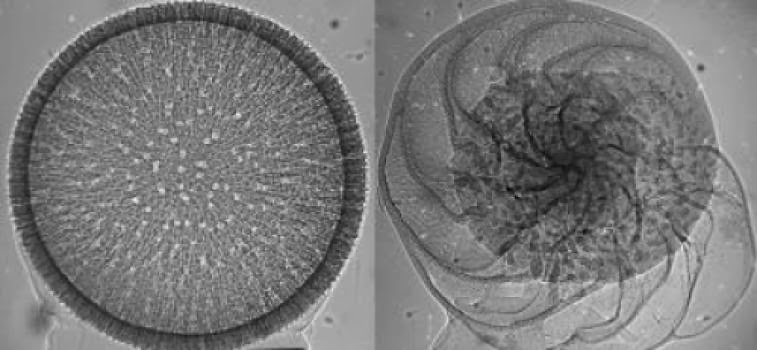
The primary food source in the abyssal plain (miles below the earths surface) is "marine snow". Marine snow is a slow drift of mucus,  fecal pellets, and body parts. One problem with this  "snow" is that there is too much snow than actual food in the area eaten by animals in the area, researchers have found. "A new paper by MBARI researcher Ken Smith and his colleagues show that the population booms by algae or animals near the sea surface can sometimes result in huge pulses of organic material sinking to the sea floor." (Science Daily.com) Smith, along with other researchers have studied the abyssal plain for over 20 years.


So much Marine Snow falls in that area that in a few weeks that it is equal in normal deep-sea environments. However, the amount of snow that falls in that area is not sufficient enough to provide for all of the organisms in the area.  The Abyssal Plain is located off the coast of Central California and is home to a vast variety of animals such as sea cucumbers and grenadier fish. Researchers note that the area has strong winds which can bring more nutrients to the oceans surface causing algae blooms.

Website: http://www.sciencedaily.com/releases/2013/11/131111185518.htm
Picture:  http://www.sciencedaily.com/releases/2013/11/131111185518.htm

Sunday, November 10, 2013

Tiger Stripes underneath Antarctic glaciers

Provided from the information give by Princeton University, friction zones occurring in wet areas underneath the Antarctic glaciers are slowing the flow of ice, causing a warming climate. Investigating how the friction areas can teach scientists how glaciers respond to a warming  climate. Just like how a speed bump would effect the speed of a car, the "Tiger Stripes" slow down the speed of glaciers.

"The friction at the interface of the bedrock and glacier ice is a major factor in the speed of the glacier." Said Sergianko, an associate research scientist at Princeton. "When friction is high, the glacier moves slowly. When friction is low, as when melting ice provides a liquid layer that allows the ice to slide over the bedrock, the glacier moves more quickly." (Science Daily)


Using mathematic data from the National snow and Ice data center, researcher discovered the locations of these areas. The tiger stripes, also referred to by researchers as "ribs" because of their  curvy form, the stripes decay over 100 by the infiltration of water that goes between the ice sheet and the bedrock.


Website: http://www.sciencedaily.com/releases/2013/11/131108091341.htm
Picture:http://images.natureworldnews.com/data/images/full/3785/antarctica.jpg?w=600

Sunday, November 3, 2013

Algal Bloom

You may often see it as "polluted water" underneath roadways or in canals, but Algal bloom aka marine/water bloom is a major increase in Algae in a system, sometimes in fresh water composed of phytoplankton which produce harmful toxins called HABs.

Also, not very many plankton are involved in the blooms. When there is a high density of colored cells, the general color of the bloom will change allowing for recognition.

The most common colors are green (light or dark), brown, or red. The concentration of algae is very high during a bloom. Sometimes, there are up to 1,000,000 cells of algae per one millimeter. This poses a threat to wildlife because of the negative biological impact.

Some blooms are created by the release of phosphorus and nitrogen into the waters, causing the growth of algae. Because of the rapid growth of Algae, it causes other plants and Algae to die.


Website: http://www.sciencedaily.com/articles/a/algal_bloom.htm
Picture: http://plants.ifas.ufl.edu/manage/sites/default/files/01_algae_07.jpg

Wednesday, October 30, 2013

Bottom-feeding behavior of Humpback whales

Known for their interesting ways of capturing prey, the humpback whales have recently been discovered to have found a new method of feeding itself; bottom feeding (specifically in the Southern Gulf).

"Humpbacks have not been known as bottom-feeders, yet this i their dominant feeding mode in this region." Says Colin Ware, a professor at the University of New Hampshire, "You've got this prominent species and until now, nobody knew how they were feeding." Ware and his colleagues have gathered data from 52 humpbacks in the region.

To track the movements of the whales from below the surface, scientists have put recording tags on the whale's backs. Ware also developed a software called "TrackPlot" to translate the tags on the humpbacks. This allowed for Ware and his colleagues to discover three different ways the humpbacks were bottom-feeding: simple side rolls, side roll inversions, and repetitive scooping.


Article:http://www.sciencedaily.com/releases/2013/10/131030125324.htm
Picture: http://theterramarproject.org/thedailycatch/wp-content/uploads/2013/09/terra-mar-humpback-under-surface-600x320.jpg

Saturday, October 26, 2013

Reading Ancient Climate from Plankton Shells

      Scientists have viewed plankton shells to chart climate changes in sea temperatures. This information could provide the means for scientists to scale temperature from millions of years ago by showing us things like tree rings. Before we used plankton to chart changes, we used ice from the poles, which trap bubbles of ancient air. "The oldest Antarctic ice core records date back to around 800,000 years ago." Says ScienceDaily.com.
   
      Scientists have learned that the plankton that grow in warmer climate have more traces of ancient atoms. Another way we can read ancient climates is by looking at the shells of dead plankton who have fallen to the ocean floor. Scientists can recover ocean floor sediments which are preserved in the shells. Researchers at the University of Cambridge have discovered magnesium in the shells of plankton, which helps us tell how warmer waters could effect the shells.


Article: http://www.sciencedaily.com/release2013/10/131
Picture: http://www.sciencedaily.com/release025123155.htm

Sunday, October 13, 2013

Sequence Stratigraphy

10/13/13

Sequence Stratigraphy has recently been added as a branch of geology and its purpose is to connect pre-historic sea level changes to sedimentary deposits. It is called 'sequence' stratigraphy because it mentions cyclic sedimentary deposits.

Sedimentary deposits are significant because they include a lot of important minerals for industries such as petroleum, gas, iron, aluminum and coal. The deposits are also used to get gravel, limestone, chalk, sand, clay, and slate.


'Stratigraphy' literally means the study of rock strata and their relationship to the geological time scale.

It also talks about the transferring and age sediments and gives us a good idea about how we get sediments.

This is important because sea levels constantly changing over time and are rising and if they continue to do so it can be very dangerous to several cities and corporations that depend on the sea.


Article 1: http://www.sciencedaily.com/articles/s/sequence_stratigraphy.htm
Article 2: http://encyclopedia2.thefreedictionary.com/Sedimentary+Deposits
Picture 1: http://strata.uga.edu/sequence/type1Shelf.gif
Picture 2: http://www.uib.no/imagearchive/produktbilde_Sequence_strat2.jpg

Sunday, October 6, 2013

Warmer Oceans Could Raise Mercury Levels in Fish

10/6/13

Should the temperature of the ocean's surface rise, fish would be accumulating more mercury. This would be horrible for sea food fanatics. Researchers have not known how global warming can effect rising mercury levels in aquatic life until now, nor has there been any experiments on the matter.
The mercury can be released into oceans and streams from industrial pollution. This can be converted into methylmercury in the water.
Scientists have examined killifish in varying temperatures in salt water marshes and in the lab. The fish in the lab ate mercury-enriched food whereas those in the salt water marshes ate natural food sources such as worms and insects.
Results showed that the fish in higher temperature waters consumed more food but grew less and had a higher measure of methylmercury in their tissues.


There is a major concern of eating seafood while pregnant but studies actually show that children of the 90's whose parents have eaten seafood while pregnant have higher IQ's and better eyesight.

Website: http://www.sciencedaily.com/releases/2013/09/130930211701.htm

Picture 1:http://upload.wikimedia.org/wikipedia/commons/thumb/c/c5/MercuryFoodChain-01.png/515px-MercuryFoodChain-01.png

Picture 2: http://www.sciencedaily.com/releases/2013/10/131003162953.htm